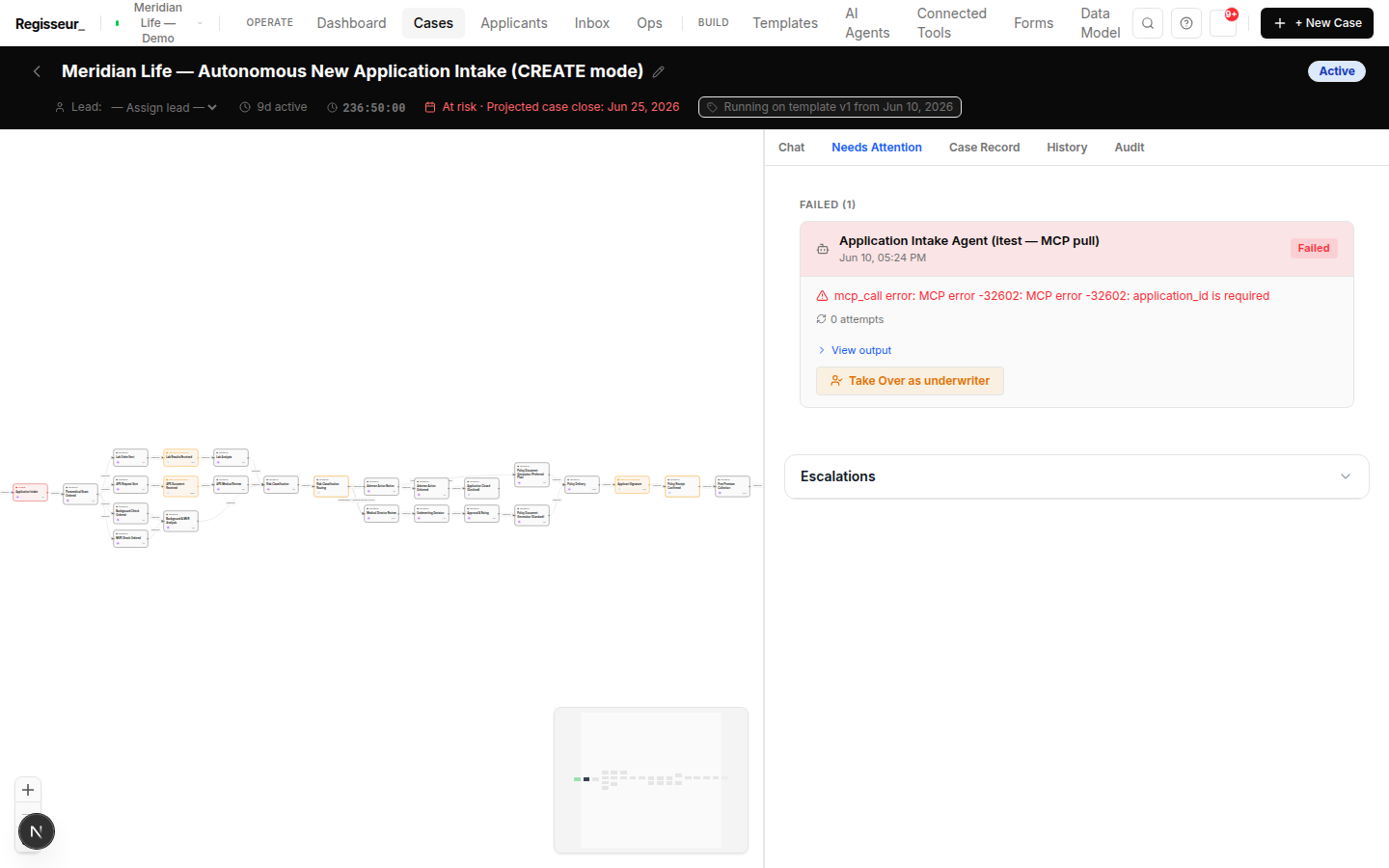
The coordinator watches for stalls.
A platform-level coordinator monitors case progress and surfaces work that's stuck — and manages the cross-party inquiries (chasing the outside party a case is waiting on) so a case doesn't quietly park forever.
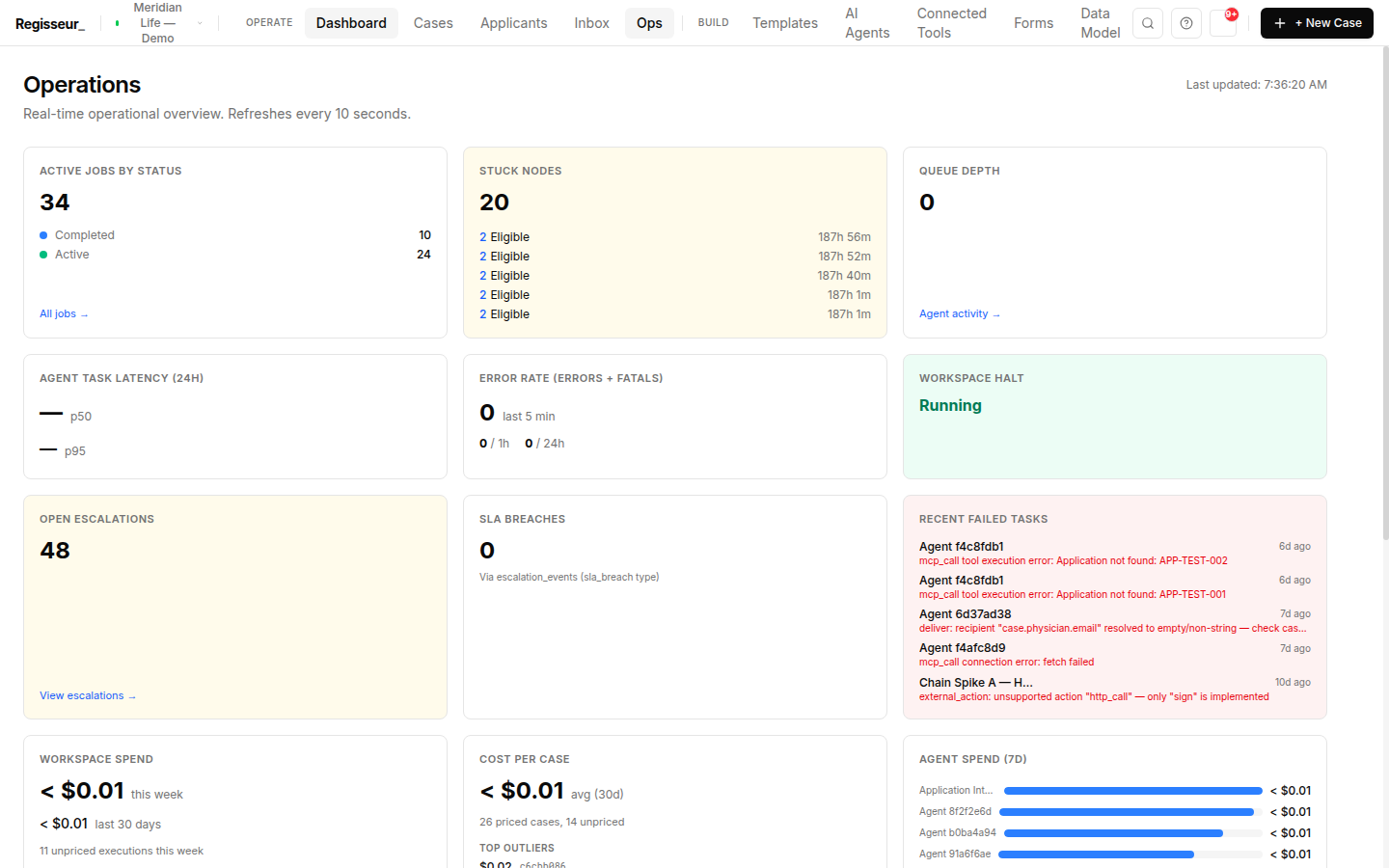
Stalls, failures, runaway loops, no-shows. Regisseur watches for them, proposes a way through, and escalates — and a person always authorizes the recovery. Self-healing operations, not autonomous ones.

A platform-level coordinator monitors case progress and surfaces work that's stuck — and manages the cross-party inquiries (chasing the outside party a case is waiting on) so a case doesn't quietly park forever.
When a step fails, the recovery engine identifies the blocked downstream work, finds candidate routes around the failure (bypass or parallel unblocked paths), and scores each by timeline impact — days delayed, SLAs at risk.
It proposes; the process manager chooses. Recovery is never silent.
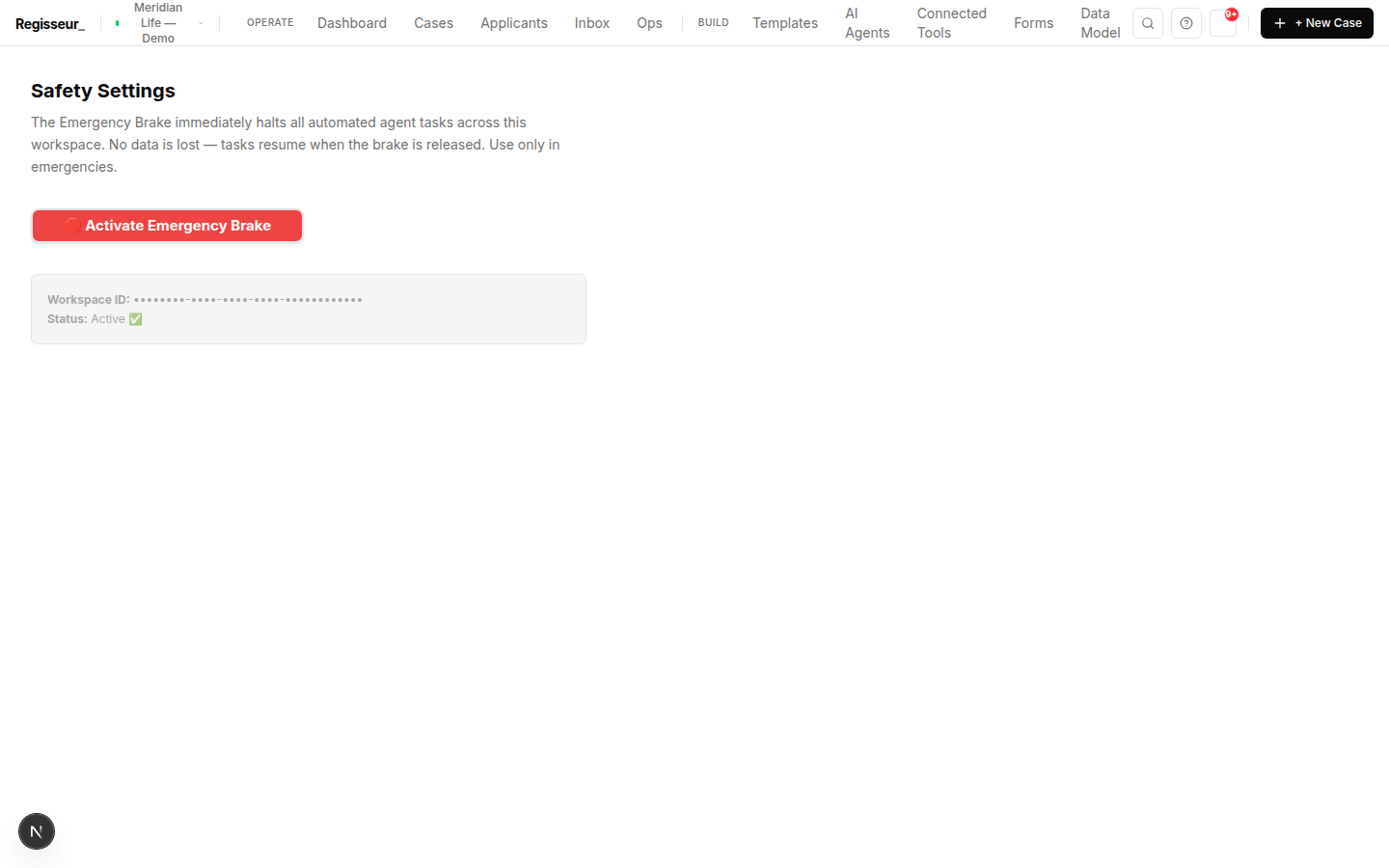
Two safety levels. The workspace-wide emergency brake halts every agent, queue, and outbound message. Below it, a per-job circuit breaker trips a single runaway case — guarding against execute/cascade loops and runaway cost — without stopping the workspace.

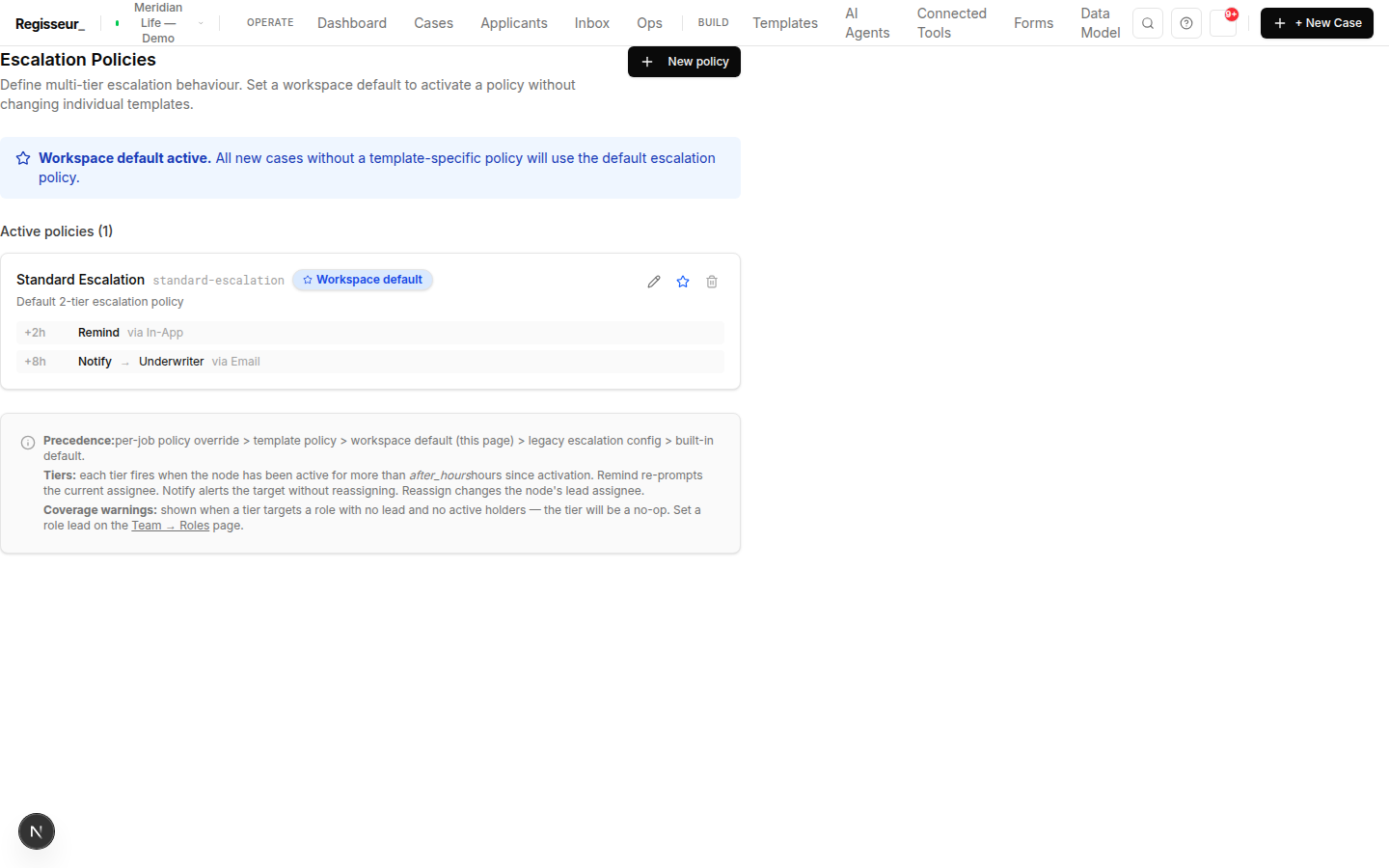
Every step carries an SLA clock. Escalation policies define who gets notified, on which channel, and when a budget is at risk. SLA projection flags at-risk cases before they breach.

Bring a process that stalls in real life. We'll show the coordinator surfacing it, the recovery engine proposing scored routes around the failure, and a person authorizing the one that ships.